

Data Providers
In unit tests, we're used to data providers — their job is to supply argument sets (datasets) for test functions.
PHPUnit Example
In PHPUnit, data providers are declared with attributes. For example, the #[DataProvider] attribute takes the name of a public static method in the current class, from which datasets will be extracted.
#[DataProvider('dataSum')]
public function testSum(int $a, int $b, int $c): void
{
    $result = Helper::sum($a, $b);

    self::assertSame($c, $result);
}

public static function dataSum(): iterable
{
    yield [1, 1, 2];
    # datasets can be named:
    yield 'second dataset' => [1, 2, 3];
}
The data provider function can be in another class — PHPUnit simply uses a different attribute: #[DataProviderExternal(External::class, 'dataMethod')].
If full data provider functionality is overkill, you can send datasets one at a time via the #[TestWith] attribute:
#[TestWith([1, 1, 2])]
#[TestWith([1, 2, 3], 'second dataset')]
public function testSum(int $a, int $b, int $c): void { ... }
That's about all there is to say about data providers in PHPUnit ¯\_(ツ)_/¯
What's in Testo?
Well, this article wouldn't exist if there was nothing to say.
First, I didn't like the #[TestWith] attribute name in PHPUnit. It conveys the intent well (test with "this"), but what about consistency? I wouldn't have known about this attribute if not by chance (do you know about it?).
☝️ It would be better if this attribute appeared in IDE suggestions when typing "Data": next to #[DataProvider]#[DataProvider(callable|string $provider)]Provides data for a parameterized test from a method or callable..
That's why in Testo this attribute is named: #[DataSet]#[DataSet(array $arguments, ?string $name = null)]Declares a set of arguments for a parameterized test. Can be used multiple times — each attribute creates a separate test run..
Second, Testo has no separate #[DataProviderExternal] attribute: the need for it simply disappears, since you can pass any callable to #[DataProvider]#[DataProvider(callable|string $provider)]Provides data for a parameterized test from a method or callable..
And third, datasets in Testo can merge not only vertically, but also horizontally and diagonally.
Let's go through everything in order.
DataSet
Simply a standalone dataset for a test:
#[DataSet([1, 1, 2])]
#[DataSet([1, 2, 3], 'second dataset')]
public function testSum(int $a, int $b, int $c): void { ... }
The second argument is a label that appears in reports. Useful when a test fails and you want to immediately see which scenario broke.
DataProvider
Like PHPUnit, Testo expects data providers to return dataset collections: iterable<array>. The attribute accepts non-empty-string|callable as a pointer to the provider.
If a string is provided, Testo first looks for a method in the same class. If not found, it checks if it's a
callable(a function orcallable-stringlikeClass::method).php// Method in current class #[DataProvider('dataSum')] // callable-string #[DataProvider('AnyClass::method')]Another
callableexample iscallable-array:php// Method from another class #[DataProvider([AnyClass::class, 'method'])]Don't forget about invokable classes with
__invoke()method:php// Class with __invoke() method #[DataProvider(new FileReader('sum-args.txt'))]Valentin Udaltsov reached out with a request for this feature, not knowing it was already implemented.
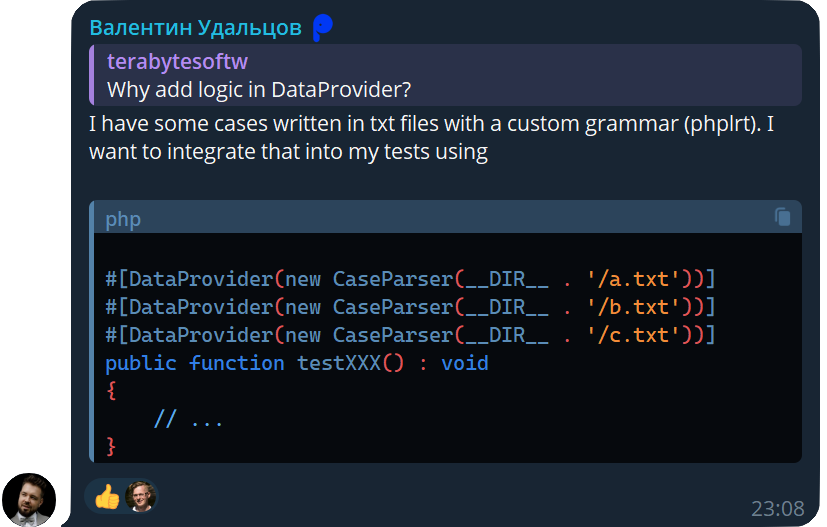 Thanks for the use case.
And the best part: closures directly in attributes. I don't have ideas why someone would need this, but if PHP 8.5 allows it, why not?
php// Just a closure (PHP 8.5) #[DataProvider(static function(): iterable { yield from Source::fromFile(); yield from Source::fromCache(\getenv('CACHE_KEY')); })] // Or #[DataProvider(SomeClass::method(...))]
Combining Providers
You probably guessed that stacking multiple Data-attributes (#[DataSet]#[DataSet(array $arguments, ?string $name = null)]Declares a set of arguments for a parameterized test. Can be used multiple times — each attribute creates a separate test run. and #[DataProvider]#[DataProvider(callable|string $provider)]Provides data for a parameterized test from a method or callable.) on a function will grow the dataset collection, similar to a UNION query in SQL.
#[DataSet([1, 1, 2])]
#[DataProvider('dataSum')]
#[DataProvider(SomeClass::method(...))]
public function testSum(int $a, int $b, int $c): void { ... }
The test runs for all datasets sequentially: first [1, 1, 2] from #[DataSet]#[DataSet(array $arguments, ?string $name = null)]Declares a set of arguments for a parameterized test. Can be used multiple times — each attribute creates a separate test run., then all from dataSum, then all from SomeClass::method().
🤔 But what if you want to combine datasets in more interesting ways?
DataZip
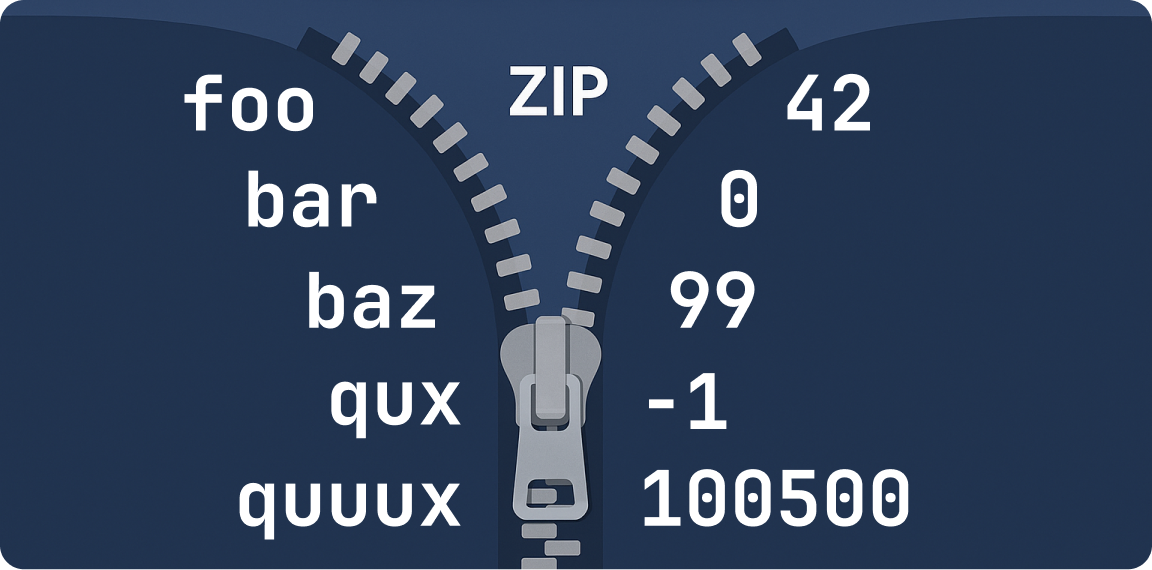
Pairs providers element by element: first with first, second with second.
Useful when a provider is already used in other tests:
// Provider 'users' is already used in testLogin, testLogout, testProfile...
#[DataProvider('users')]
public function testLogin(string $user): void { ... }

// Here we want to add expected permissions for each user
#[DataZip(
    new DataProvider('users'),       // admin, guest, bot
    new DataProvider('canDelete'),   // true, false, false
)]
public function testDeletePermission(string $user, bool $expected): void { ... }
Result: admin → true, guest → false, bot → false.
DataCross
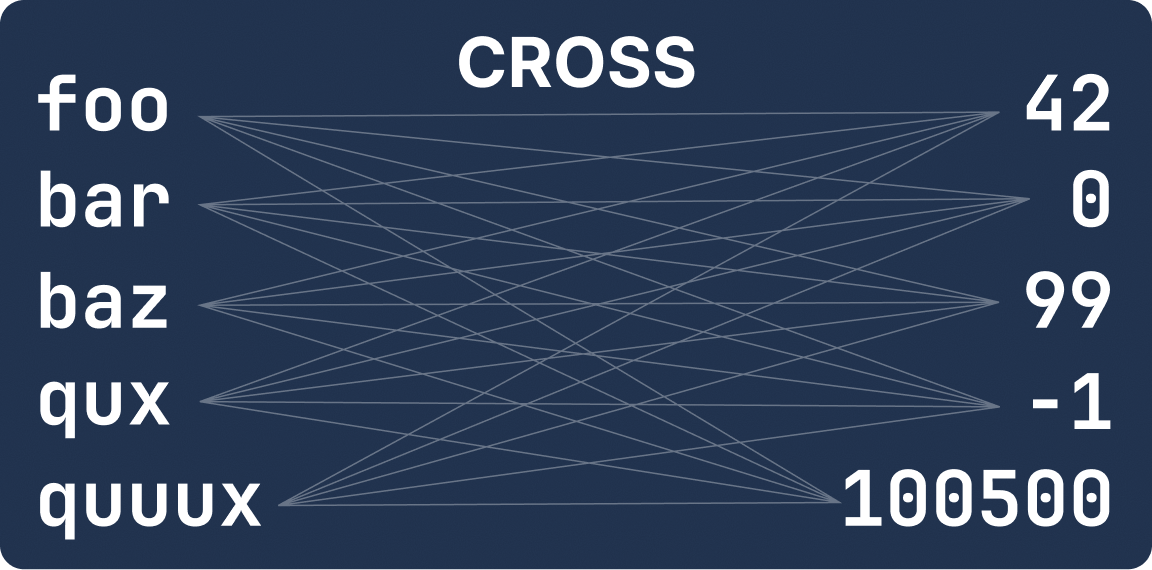
Cartesian product — all possible combinations. Useful when parameters are independent and you need to test every pair.
#[DataCross(
    new DataProvider('browsers'),    // chrome, firefox, safari
    new DataProvider('screenSizes'), // desktop, tablet, mobile
)]
public function testResponsiveLayout(string $browser, int $width, int $height): void { ... }
3 browsers × 3 screen sizes = 9 tests. Three providers with 5 elements each — already 125 tests. #[DataCross]#[DataCross(DataProviderAttribute ...$providers)]Creates all possible combinations from providers (cartesian product). grows fast, use wisely.
DataUnion
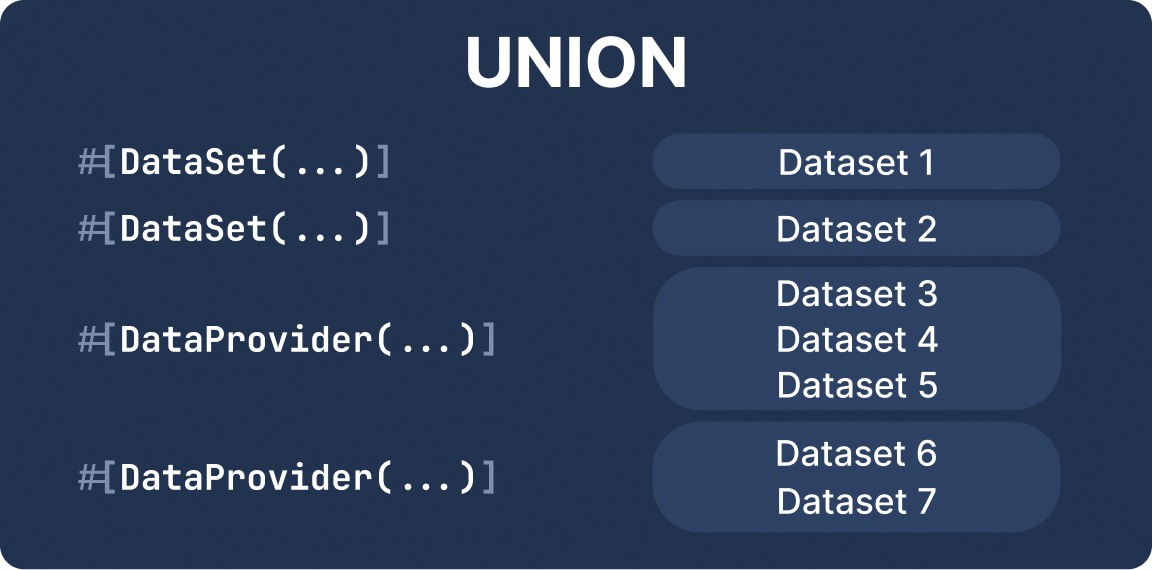
The #[DataUnion]#[DataUnion(DataProviderAttribute ...$providers)]Merges data from multiple providers into a single sequential set. attribute merges multiple providers into one — simply concatenates datasets into a single collection, just like stacking multiple #[DataProvider]#[DataProvider(callable|string $provider)]Provides data for a parameterized test from a method or callable. attributes on a test.
🫤 Wait, why a separate attribute?
#[DataUnion]#[DataUnion(DataProviderAttribute ...$providers)]Merges data from multiple providers into a single sequential set. is needed inside #[DataCross]#[DataCross(DataProviderAttribute ...$providers)]Creates all possible combinations from providers (cartesian product). or #[DataZip]#[DataZip(DataProviderAttribute ...$providers)]Pairs up providers element by element.:
#[DataCross(
    new DataUnion(
        new DataProvider('legacyFormats'),
        new DataProvider('modernFormats'),
    ),
    new DataProvider('compressionLevels'),
)]
public function testExport(string $format, int $compression): void { ... }
All formats (legacy + modern) are crossed with each compression level.
Nesting
Providers can be nested to any depth:
#[DataCross(
    new DataZip(
        new DataCross(
            new DataProvider('users'),      // alice, bob
            new DataProvider('roles'),      // admin, viewer
        ),
        new DataProvider('canEdit'),        // true, false, true, false
    ),
    new DataUnion(
        new DataSet([new Document('readme.md')], 'readme'),
        new DataProvider('documents'),      // doc1, doc2
    ),
)]
public function testDocumentAccess(
    string $user,
    string $role,
    bool $canEdit,
    Document $doc
): void { ... }
Here users × roles produces 4 combinations, which are zipped with 4 expected results, and all of that is crossed with 3 documents (1 from DataSet + 2 from DataProvider) = 12 tests.
Can PHPUnit do this?
Not out of the box. But there's t-regx/phpunit-data-provider package that adds cross(), zip(), join() and other methods.
Here's what similar code looks like:
#[DataProvider('usersWithPermissions')]
public function testDeletePermission(string $user, bool $expected): void { ... }

public function usersWithPermissions(): DataProvider
{
    return DataProvider::zip(
        DataProvider::list('admin', 'guest', 'bot'),
        DataProvider::list(true, false, false)
    );
}
It works, but requires an intermediate wrapper method. In Testo, composition happens declaratively — right in the attributes above the test.
Write less, test more